3 Beautiful Cities To Experience Holy Week in Spain, In and Near Madrid in 2026

Updated January 2026
Holy Week in Spain is nothing short of a culturally rich and religiously significant celebration that annually draws in upwards of 1 million visitors worldwide (in Seville alone, the unofficial Spanish capital for Semana Santa/Holy Week festivities).
So if you find yourself in Madrid during Semana Santa this 2026, which runs from Palm Sunday (March 29th) to Easter Sunday (April 5th), stick around to see the places where you can participate in this cultural and religious event, which is a quick day trip from Madrid.
Plan Your Trip to Spain With My Favorite Resources
– Book your hotel accommodation in Spain with Booking.com
– Book day tours around Spain with Viator.com
– Purchase your travel eSIM to stay connected in Spain with MayaMobile.com
– Browse my recommended travel essentials here: Travel Essentials For Your Next Trip!
3 Beautiful Cities To Experience Holy Week in Spain, In and Near Madrid in 2026
1. Toledo
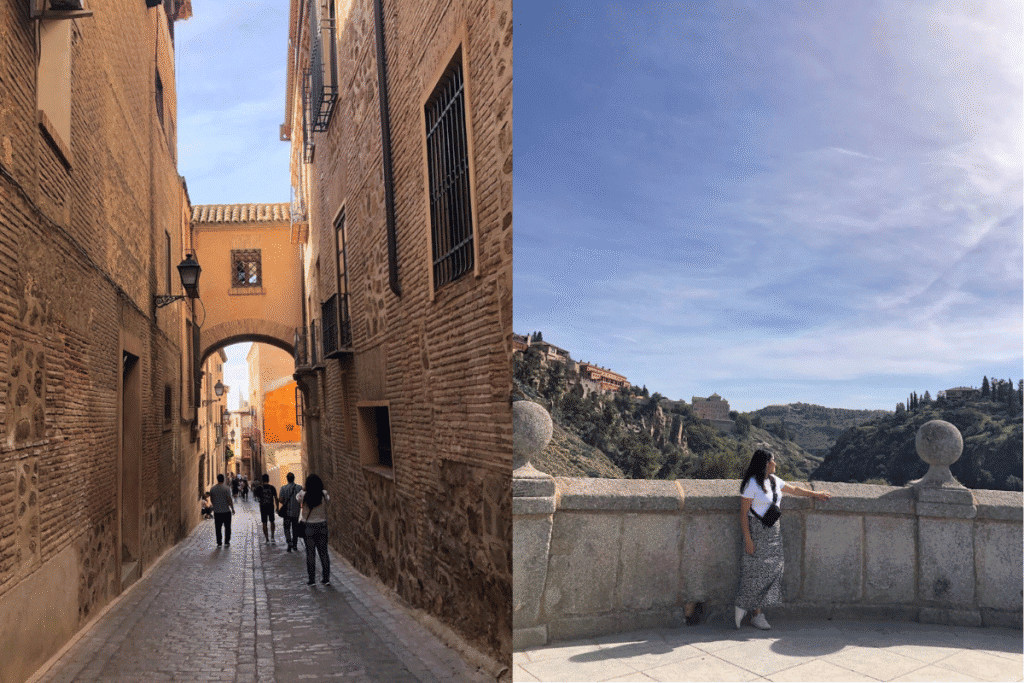
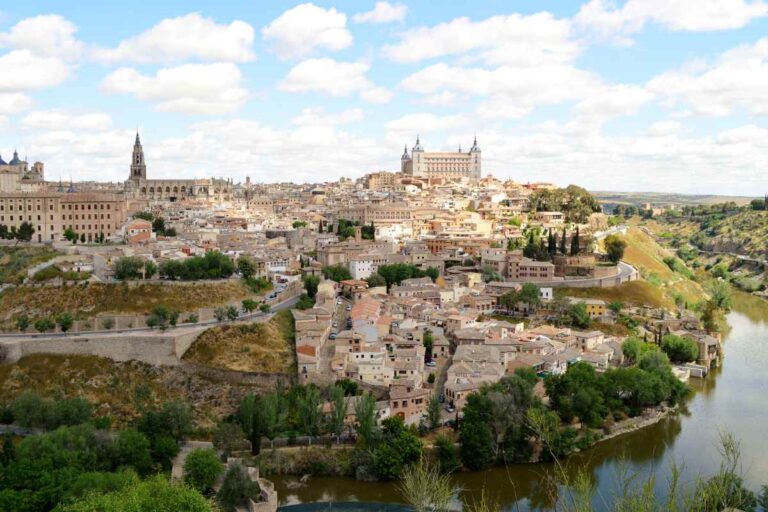
Just an hour bus ride from Madrid’s Plaza Eliptica Station, you can take an ALSA bus and arrive at the City of Three Religions – Toledo.
Toledo is a very beautiful and exciting city, as it has been heavily influenced by three major religions over time: Judaism, Catholicism, and Islam.
It is also a city that drips with medieval-style architecture, with beautiful, massive doors that look thousands of years old, a wide river running through the walled city, and so much more.
A trip to Toledo, Spain, is a must at any time of year, especially during Semana Santa/Holy Week, when locals and visitors come together for this holy event. The best part is that traveling from Madrid to Toledo is SUPER easy!
Take a day trip during Semana Santa and experience the procession around the beautiful cobblestone streets of old Toledo.
ℹ️ Find more activities and fun things to do in Toledo
>> Read More: 11 Of The Best Day Trips From Madrid, Spain
2. Segovia
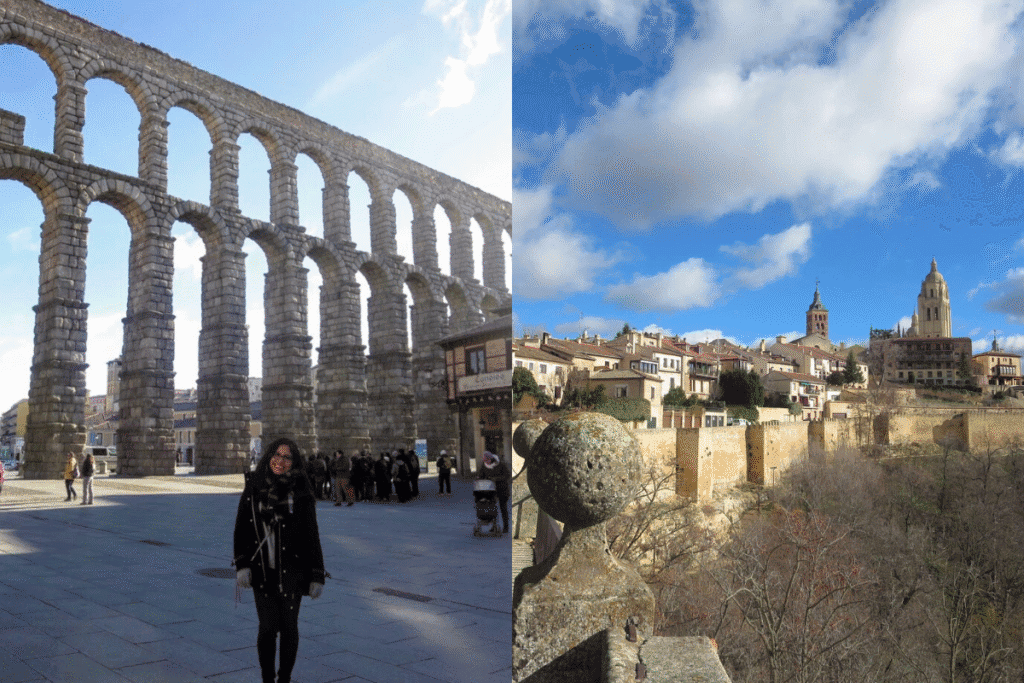
In a little over an hour, taking an ALVIA train from Chamartin station, you could be standing beneath one of Madrid’s most iconic aqueducts that dates back to the Romans and experiencing Semana Santa Segovia style.
Experience everything from the religious processions that depart from the church and wind through town, including the iconic aqueduct and other beautiful sites, to observing local culture and sampling delicious Semana Santa favorite dishes and treats.
ℹ️ Find more activities and fun things to do in Segovia
3. Madrid
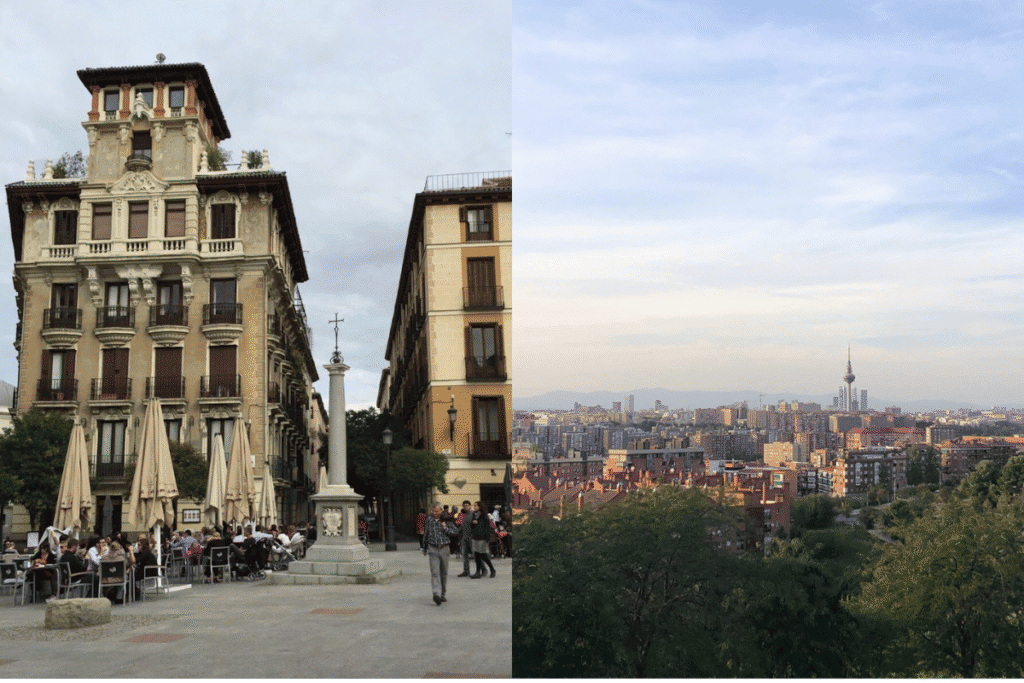
Madrid – Spain’s capital, of course, has its own Semana Santa celebrations that are often great to experience if you want to avoid the masses congregating in Andalusian cities like Seville or Cordoba.
The procession goes around Plaza Mayor, and the restaurants and bars nearby are buzzing with people – both locals and visitors wanting to catch a glimpse of the hooded brotherhood carrying the ornate floats.
While you’re experiencing Semana Santa in Madrid and trying typical dishes and desserts of the season, don’t forget to try Madrid’s famous bocadillo de calamares, a fried calamari sandwich that is very popular in the city.
ℹ️ Find more activities and fun things to do in Madrid
>> Read More: The Top 10 Best Things To Do In Madrid For Free
BONUS CITY: Salamanca
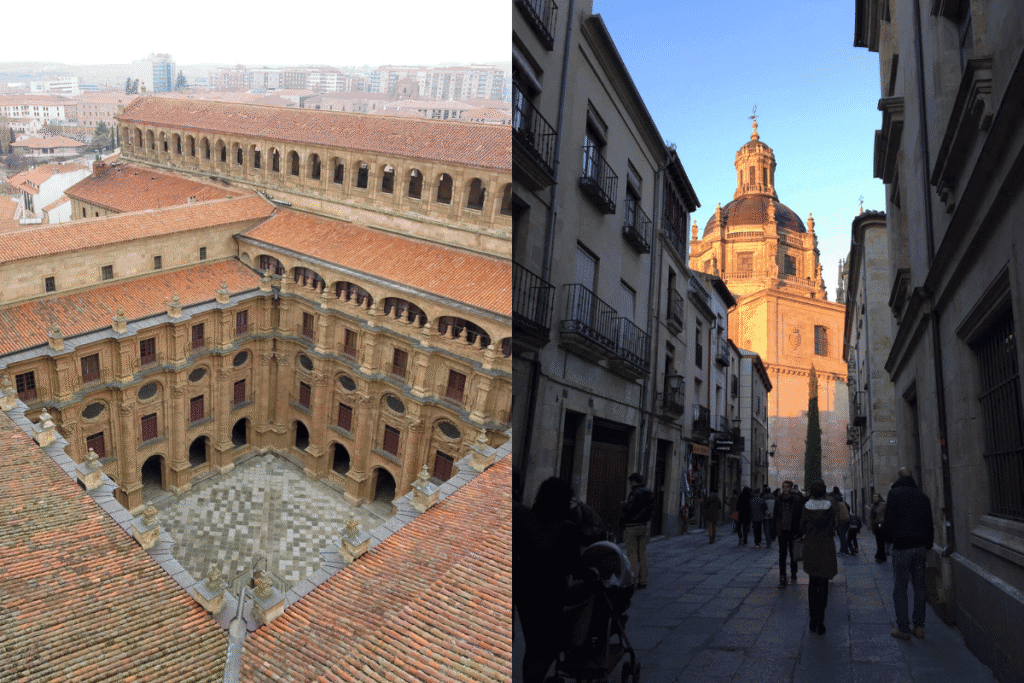
Salamanca has to be on your list of places to visit in Spain because of its history, culture, and beautiful red-roofed buildings, which you can see from the top of the church cathedral.
Just about a little under 2 hours on the high-speed ALVIA train from Chamartin Station, you can get your ride to Salamanca, a city that is home to the oldest.
Experience the colorful way in which Salamanca celebrates and brings to life this event through its streets as crowds of people follow the brotherhood carrying the ornate floats, taking you through streets you may have never seen before.
Enjoy more torrijas and buñuelos de viento as you look at visitors and locals coming in and out of the bars that line the famous Plaza de España.
ℹ️ Find more activities and fun things to do in Salamanca
BONUS CITY: Ávila
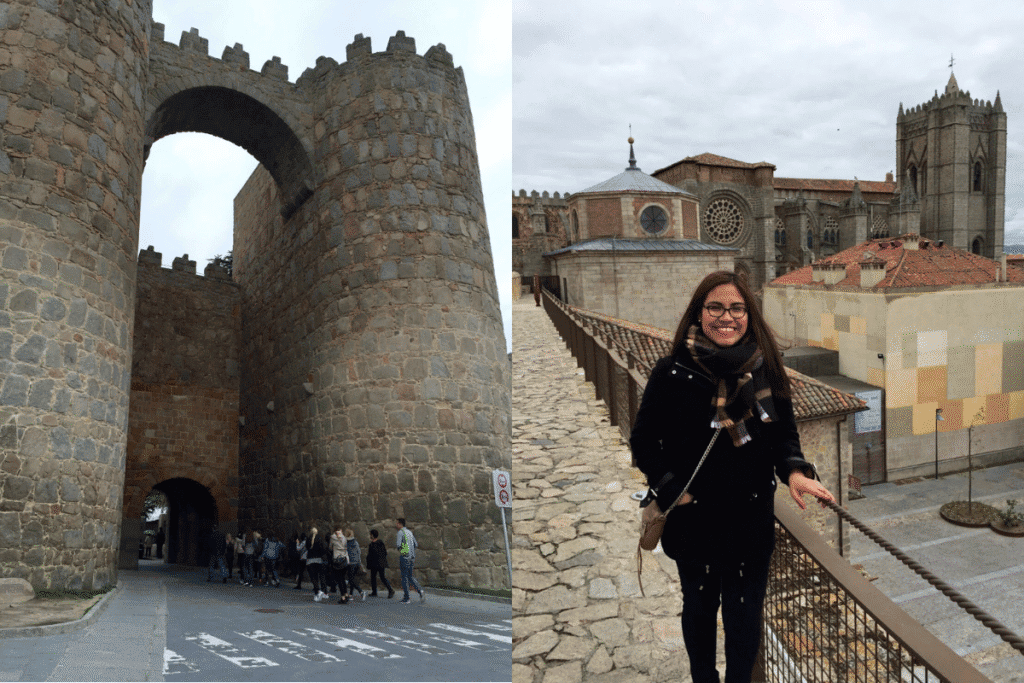
It takes about 2.5 hours by train from Chamartin station to reach the beautiful walled city of Ávila, located west of Madrid.
Known for its grandeur and strong walls, this city welcomes visitors to all events, including Semana Santa.
Make your way to Ávila to experience the processions and the brotherhood making their way around the walled-in city, and enjoy learning about how they decorate the city and how the people of Ávila share and explain the story of the Passion in their plays and displays.
ℹ️ Find more activities and fun things to do in Avila
What is Holy Week in Spain (Semana Santa), and what happens?
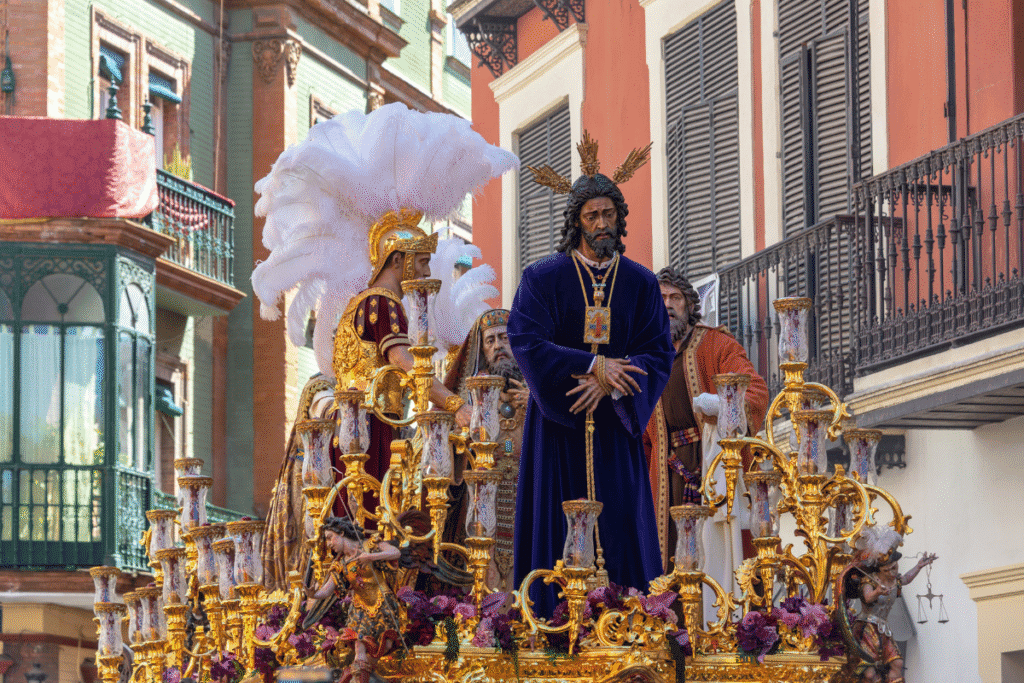
Holy Week in Spain (Semana Santa in Spanish) is as much a religious event as a cultural one at this point.
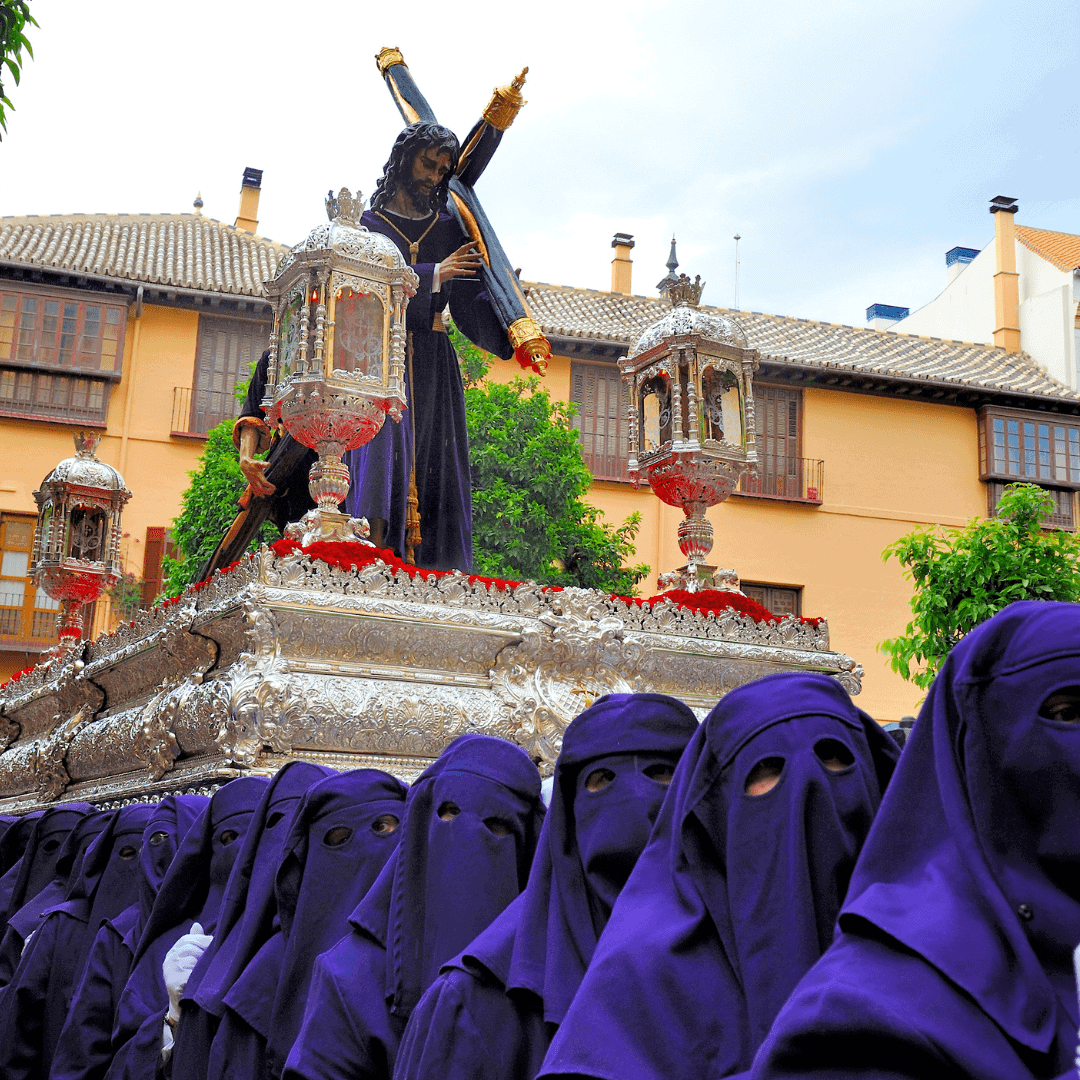
If you’ve heard anything or seen anything related to Semana Santa in Spain or Holy Week, you’ve most likely seen pictures of men dressed in purple or white robes.
Men covering their faces and wearing pointy caps (capirotes) that resemble the attire of a notorious racist hate group in the U.S., but have nothing to do with each other, carrying a very decorative, religious float on their shoulders.
Holy Week in Spain is a week-long Catholic event that typically happens during the spring season, during which people in many cities across Spain participate in the reenactment of the Passion of Jesus Christ.
Throughout Holy Week, or Semana Santa, you’ll notice a different ambiance in the air.
The first few days mainly consist of processions of these hooded men, often called brotherhoods, and they carry together very ornate “floats” resembling altars with religious figures. From Jesus to the Virgin Mary.
“Nazarenos,” who participate in the procession, carry the candles, crosses, and other religious objects as the brotherhood tours a designated route throughout the town, returning to the church.
Women also participate in the procession, as they are typically dressed in a black veil, further adding to the somber, serious, and “painful” ritual, which symbolizes the sentiment towards Jesus’ crucifixion.
As the days of Semana Santa towards Easter pass, the ambiance will feel a bit more joyful and lighter; that is when you will see and feel a stronger festival vibe.
Holy Week in Spain is supposed to ultimately represent what Jesus went through from the moment he was crucified to the moment he was resurrected.
Places where Holy Week is majorly celebrated throughout Spain
Although many places across the country are famously known for doing it big during Holy Week in Spain, such as…
- Seville
- Málaga
- Cordoba
- The Castile & León region, especially Zamora, Salamanca, Valladolid, Ávila, and Toledo (which I included on this list because they’re not too far from Madrid)
- Barcelona
- Valencia
- La Rioja
Many of the cities that celebrate Semana Santa/Holy Week BIG are mostly in the southern region of Spain (Andalucía), specifically cities like Seville, Málaga, and Córdoba.
The good thing here is that many other places, especially in or near Madrid, are also worth checking out to celebrate this event.
If you want to avoid huge crowds in Andalucia, sticking around the Madrid region may mean slightly fewer people to maneuver around.
Who celebrates Semana Santa?
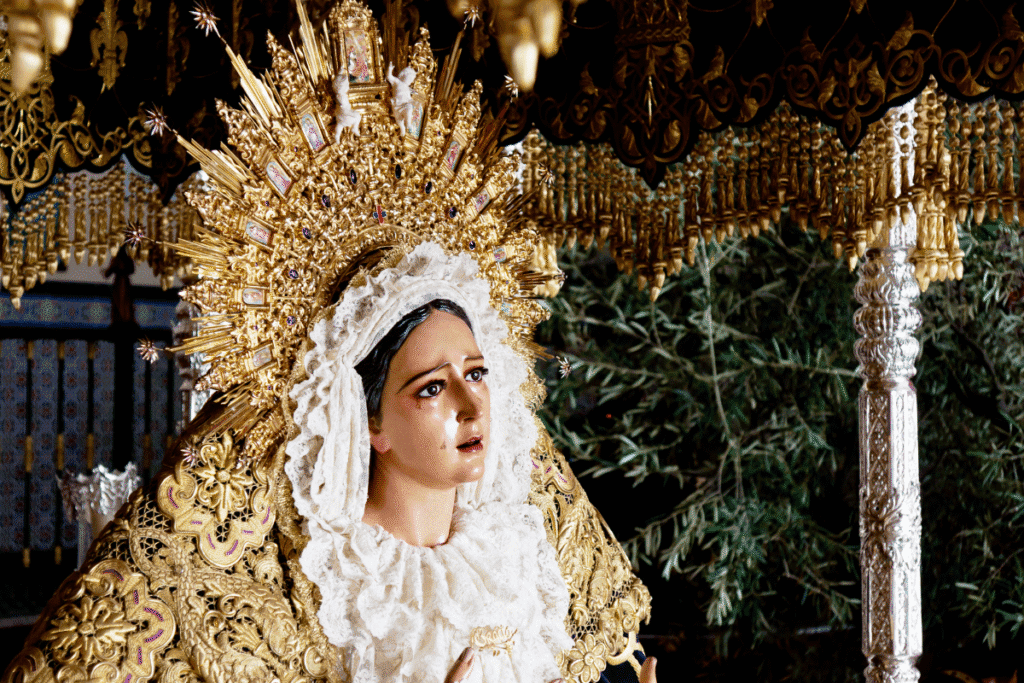
Semana Santa in Spain is celebrated by most Spaniards, regardless of religious belief, as it’s a major celebration that draws many visitors worldwide.
Many people see Holy Week in Spain as a cultural event as much as it is a religious one.
Aside from Spanish people celebrating this event, many other Spanish-speaking countries celebrate their own version of Semana Santa.
Countries including Mexico and various other South American countries, such as Colombia, El Salvador, Costa Rica, Guatemala, Peru, and others that Spain colonized, adopted Catholicism at one point.
Interesting facts about Semana Santa
- Semana Santa is celebrated not only in Spain and other Spanish-speaking countries but also in Portugal.
- The ornate float that is carried to honor Jesus, The Virgin Mary, or depict a scene from the Passion of Jesus Christ can weigh around 1000 kilograms.
- Jail inmates are allowed to be released on Easter Sunday to carry the ornate float, a tradition since 1759, when a plague struck the city of Málaga. Instead of canceling the procession, the inmates volunteered to risk illness to keep it going. It’s been going on ever since.
- Different regions within Spain add a bit of their own cultural mix to the traditional Semana Santa. For instance, you’ll see the Danza de la Muerte instead of the Last Supper scene in Barcelona. Malaga celebrates Semana Santa in a more uplifting, colorful, and vibrant way, unlike Seville, where it’s more serious. In the city of Valladolid, there are reenactments and people dressed in medieval clothing on horseback announcing various events as they happen.
Semana Santa traditions and food
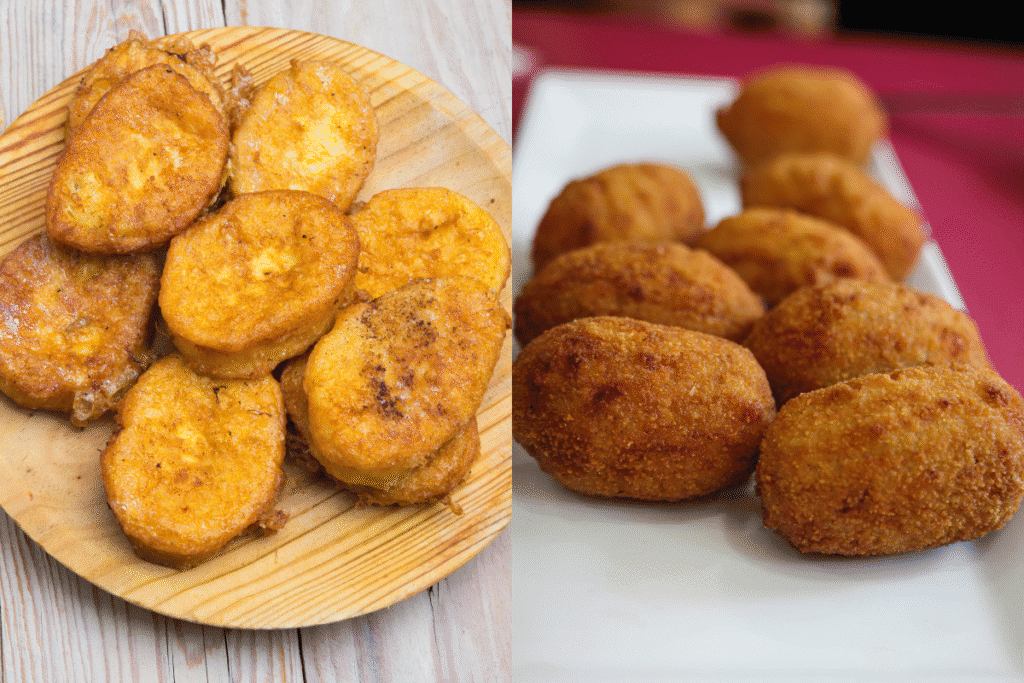
Some traditional foods you will experience during Holy Week in Spain include…
- Torrijas (pictured on the left) resembles French toast, with this syrup-drenched bread that is a cross between bread pudding and French toast. It is most common in Madrid (although you can find them anywhere during this time). In Mexico, this would resemble the popular dish Capirotada, which is similar to Spanish Torrijas and is also enjoyed during Semana Santa in Mexico.
- Bacalao (cod) Croquettes: (pictured on the right) little fried balls of codfish, flour, butter, breadcrumbs, egg, and onion. You’ll notice that popular Semana Santa food is usually fish- or veggie-centered, as the religion forbids eating meat on holy days.
- Buñuelos de Viento: this delicious dessert treat is like mini donut holes and is fried in olive oil and dusted with powdered sugar – you cannot go wrong with this combination!
- Bacalao (cod) and Potato Stew: Another fish dish mixed with hearty potatoes, which is very popular around this time because, as you may know, you are not allowed to have any red meat during this time.
Like it? Pin it!
Holy Week in Spain Q&A
When does Holy Week/ Semana Santa in Spain take place?
Holy Week is not on the same date each year, so the celebration usually occurs in late March or early April. So, be sure to check every year for exact dates so you can plan your travels accurately!
What does Spain do during Holy Week?
During Holy Week, Spain and many majority Catholic-practicing countries observe the crucifixion and resurrection of Jesus. The celebrations and religious processions occur between Palm Sunday and Easter Sunday.
In Spain, that celebration includes time-honored traditions like a religious procession by the “hermandades” (religious brotherhoods) of the church, carrying ornate, detailed statues of Christ and the Virgin Mary on impressive altars throughout the streets of towns and cities across Spain.
What are the floats for Holy Week in Spain?
The “floats” for Holy Week in Spain are tall and have very detailed images, symbols, and statues of Christ and the Virgin Mary. These “floats” are carried by the religious brotherhoods, dressed in hooded attire, typically white or purple.
As the religious procession goes on, there is occasional silence, then chant and religious music.
What happens on each day of Semana Santa?
During Semana Santa/Holy Week, families mostly gather to watch the processions on the street; many attend different mass services throughout the week and also have special lunches together as families.
Why is meat generally avoided during Holy Week in Spain?
Typically, meat is not consumed not only during Holy Week but also throughout Lent.
The reason is that, according to the Bible, Jesus sacrificed himself on Good Friday; therefore, Catholics honor this by not eating meat on Fridays during Lent and Holy Week.
Concluding thoughts on 3 beautiful cities to experience Holy Week in Spain – in and near Madrid
I hope this post gave you a good idea of places to experience Semana Santa in Spain, especially if you wish to stay close to Madrid.
I experienced Semana Santa in Madrid when I lived there, and I saw the procession as it was making its way into Plaza Mayor. As a Latina who is no stranger to Semana Santa, it was so interesting to experience it in Spain and see the traditions there.
I also know that if you’re an English Teacher living in Spain, you want to see your options for experiencing Semana Santa.
Although Andalucia is very popular for this event (and totally worth a visit at some point!), experiencing Semana Santa a little closer to the capital (if that is where you live) is also a great experience.
Let me know in the comments below: if you’ve participated in a Semana Santa event before, what was your experience like? Or if you haven’t yet, which city caught your eye!
I’d love to know, so don’t forget to leave me a comment!
To many more travel moments like these,

Like it? Pin it!